
The Scarlet Letter

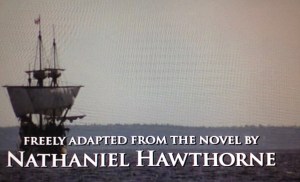
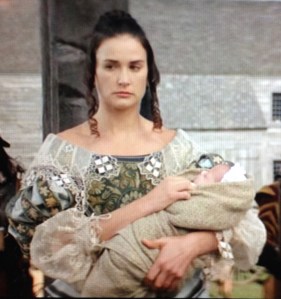
Demi Moore as Hester Prynne arrives on the shores of Puritan New England with lace embellishments on her outfit and crazy notions of acquiring her own home to live in solo, while her husband is otherwise occupied with parking the schooner or testing the patience of the neighbouring Algonquin population. She says and she does with open-hearted personal authority and does not wait for permission to go about her business. Naturally, the colonists hate her.  In The Scarlet Letter—richly transcending the source novel—‘A’ is for authority, agency and authenticity.

Gary Oldman, as Rev Arthur Dimmesdale, has a face only a sexually pent-up pilgrim would want to sit on. They meet when Dimmesdale helps her out after her carriage blows a tire. He seems not perturbed that she is alone and eager to make her acquaintance. What follows is a series of meet cutes as the two develop an attraction to each other. Eventually, Hester receives word (via Dimmesdale, the sly fox) that her husband has perished (no body though!) and, after deciding that the seven years of grief dictated by puritan law is arbitrary and stupid, they go to the barn for some privacy and have sex on a pile of grain.
IMG_4872

If someone put the above on a t-shirt, I’d wear it!

Hester’s sweet, Instagram-ready decor scheme and scandalising fashion choices are rivalled (in a friendly way) by the bold accessorising and whimsical yard design of a farm for rebel ladies run by Harriet Hibbons (Joan Plowright.) “When first we came,” she reminisces, “there was dancing around the maypole. […] Now a whipping post stands where the maypole used to be.” The fashion and decor practiced by Hester, Harriet, and others is an expression of the freedom the puritan culture hasn’t wrung out of them. And this tight grip of control is only getting worse at the time of Hester’s arrival. 

“You don’t put her in prison. You put the prison in her,” advises Meredith Stonehall (Dana Ivey), the wife of a Puritan dingdong overseeing Hester’s fate after she falls pregnant with Dimmesdale’s child. This is a chilling piece of fashion policing theory. Hester’s style—loose and lacy—has rankled from her arrival, and the scarlet ‘A’ for adulteress she is forced to wear is a perverse adornment for a woman who would otherwise only wear a colourful accessory when feeling agency to do so.

IMG_4868

In The Addams Family, Dana Ivey’s character rejects the thieving, duplicitous, cis-supremest scheming of Dan Hedaya for Cousin It. Her character’s intellectual backflips for repressive Puritanism here are a knife to the heart.

After the birth of Pearl—Hester and Dimmesdale’s daughter—we discover that Hester’s husband, Roger (Robert Duvall), has been alive all along, living in captivity with a tribe of Indigenous people.We are shown quickly why Hester mourned so little for Roger after his ‘death’ when he aggressively forces a wash cloth into her face and flips a bowl of water at her upon his arrival in her home. He then ensconces himself with the colony’s head gargoyles (concealing the fact that he is Hester’s husband), facilitates the gang assault of Hester’s female slave (to coerce her into spying for him—he later murders her), declares Pearl to be “the Devil’s own child!” (he would know), and murders a man leaving Hester’s home thinking he is Dimmesdale. (Nope! This man dropped in with the sole intent to rape Hester.) The murder is done in a way that implicates the Indigenous peoples, starting a war. This fuckin’ guy.

The film seemed like an opportunity to collectively express frustrations with Demi Moore’s naked ambitions for herself. A February 1994 news article from Entertainment Weekly opens with “Demi Moore as a Puritan? Stop that snickering. The actress who twice took it all off for the cover of Vanity Fair is about to sign on to play the role of Hester Prynne…” You know what? Hester requires grit, determination, confidence in speaking one’s mind, and the sexiness that emerges when an individual possesses those qualities. A 1995 Rolling Stone Q&A includes the following quote from Michael Douglas, the holy ghost of the divine trinity of erotic thrillers, Basic Instinct, Fatal Attraction and Disclosure: “Demi gets more done in a day than most guys do in a week. She’s really running on all cylinders.” Hester is more Demi than not.
IMG_4866

The most important fashion catwalk is the perp walk. – John Waters                                        (See also: Lori Loughlin; Leona Helmsley)

A viral tweet from @LLW90210 in 2018 punctuated a simmering discussion online about men and their terrible living quarters:

“every straight girl on this site has an apartment filled with stunning art, plants and vintage furniture but is in love with a man who sleeps on a bare mattress next to his PS4”

Both vox.com and vice.com published reporting in late 2018/early 2019 on the internet perception of men eschewing bed frames (Vice) or forgoing decor, save for, yes, a video game console and an easy chair, altogether (Vox). Both pieces take pains to acknowledge that lousy apartments, lack of interest in decor, and a general tolerance for disgusting housekeeping practices are not gendered male exclusively, nor are decor, style and tidying exclusively female interests. However, the internet’s teasing was getting at something that felt true, even if not verified by social scientists nor biologists. “Look, I don’t have the demography,” one man who is without a bed frame is quoted in the Vice piece, “But I think that society encourages women to take care of themselves in a way it doesn’t really for men.”  

This meme gets at a very real anxiety. If an old pizza slice in the bathroom, disused gym shorts as pillow cases, and a variety of handguns lying about the living room floor (all examples from the Vox piece) are acceptable, where does that leave art, greenery and vintage furniture, let alone the person who chose them with care?  Hester made the most of the home she chose (yeah, she was hoping the husband would never show up), but, just like her fashion, found that it still meant nothing when it came to asserting her autonomy where the colonists were concerned.

Hester has a slave, Mbtuba (played by Lisa Andoh), but the film does not develop the inherent conflict in Hester demonstrating personal agency while denying another woman hers. As mentioned previously, Mbtuba pays with her life for Hester’s crimes, absorbing the colonists’ worst impulses for punishment and debasement. If Hester is assigned the scarlet ‘A’ to wear as a walking prison, Mbtuba has worn her prison for far longer as an enslaved black woman, compounded by Hester being her mistress. We are all implicated in her imprisonment. 

The Scarlet Letter was directed by Roland Jofeé and released in 1995.

WORKS CITED

Brennan, Judy and Cagle, Jess. “Casting ‘The Scarlet Letter.'” EW.com. February 4, 1994. https://ew.com/article/1994/02/04/casting-scarlet-letter/

Jennings, Rebecca. “Why the internet loves dunking on guys’ terrible apartments.” Vox.com. December 19, 2018. https://www.vox.com/the-goods/2018/12/19/18141261/apartments-bad-male-minimalism-twitter-meme

@LLW90210 (Lauren). “every straight girl on this site has an apartment filled with stunning art, plants and vintage furniture but is in love with a man who sleeps on a bare mattress next to his PS4” twitter.com. August 5, 2018. Account suspended. (Accessed via Jennings, Rebecca. “Why the internet loves…” on June 5, 2019.)

Udovitch, Mim. “Q&A: Demi Moore.” February 9, 1995. rollingstone.com. https://www.rollingstone.com/movies/movie-features/qa-demi-moore-202654/

Yagoda, Maria. “Why Do So Many Adult Men Keep Their Mattresses On The Floor.” vice.com. February 5, 2019. https://www.vice.com/en_us/article/vbwvqx/why-do-men-keep-their-mattresses-on-the-floor

The Last Seduction

In what suburban basement has The Last Seduction been hiding in since its release in 1994? Beyond an enthusiastic endorsement from Samantha (Kim Catrall) and Miranda (Cynthia Nixon) in the 1998 pilot episode of Sex and the City, we have not heard much about Seduction or Bridget, the film’s diabolical lead, or any legacy left behind in the twenty-five years it has been around. Perhaps there is a reason for that.

Roger Ebert, in his review of the film upon its release, deliciously described the set-up of the film:

“As the movie opens, she [Bridget, played by Linda Fiorentino] and her husband [played by Bill Pullman] have made a big haul – $700,000 in illegal funds. Then he makes the big mistake of hitting her in the face. He knows it’s a mistake: ‘Hey, you can hit me anywhere, hard.’ During the course of the movie she will accept his invitation, in her own way.”

The quotation from Ebert’s review is cut off before it can get into the sausage fixings of where this film truly goes. Bridget is beyond seeking revenge or justice from her husband for hitting her and this violence is far from the turning point Bridget needs to empower herself to leave a toxic marriage. We suspect that Bridget has seen through her cheap suit of a husband for a long time and her pre-requisite to leave was $700,000 cash.

On the advice of her flypaper lawyer who is drawing up and serving her husband papers for divorce, Bridget sits tight in the upstate community of Beston. Bridget is hoarding the cash until her divorce comes through, cornering her husband into not being able to make a claim unless he wants to explain to the authorities how they came into the money. (“Are you still a self-serving bitch?,” her lawyer asks, just making sure she does not have a case best suited for the ACLU.) While in Beston, Bridget finds a job (in phone sales–yes, she is an aggressive telemarketer,) and a sexual plaything (Peter Berg, who wears a perpetual ‘huh?’ expression), all the while collecting the pieces she will later fit together into her triumph.

In collecting those pieces, Bridget embraces a specific freedom that is predicated on others buying into destructive narratives about themselves and the world around them. When Harlan (Bill Nunn), a private detective sent by her husband, corners Bridget in her car with the sole aim of retrieving the cash, Bridget taunts him about the size of his penis, wondering whether or not it would live up to her expectations of that of a black man. To shut her up, he whips it out. Bridget then crashes the car and sheepishly says to the investigating (white) police officer, “The jist of [his threat] was, he was going to, um, impale me with his…big….” The police officer finishes the story without asking for further detail.

Bridget’s Beston plaything, Mike, employs willful blindness in his relationships with the women in his life. Bridget is unambiguous about her expectations for their relationship when they first meet: just sex. He, rather than ending a relationship that does not give him what he wants or embracing the form it is taking, continues to pester Bridget for more. When she does invite him into her home and heart (what’s left of it), the condition is that he help her sell the murders of cheating husbands to betrayed wives over the phone. Bridget correctly guesses that Mike has an ex-wife and that their marriage was impulsive. “[O]ne of those sudden, horny things,” she says. Mike confirms this but does not say more beyond the following: “Trish was a mistake. Boy from Beston moves to Buffalo, gets lonely, meets girl, screws up big time.”

Intuiting that there is a secret to exploit, Bridget, without Mike knowing, goes looking for Trish (played by Serena) in Buffalo and discovers that she is a trans woman. A cis-man making love with a trans-woman is an expression of a broad spectrum of desire for both parties. Bridget contorts this narrative into one that says Mike sought out and liked sex with a man and is gay and is a joke for trying to pretend otherwise. Her final ploy to put him in his place is to verbally humiliate him about his denied queerness while simultaneously inciting him into a rape role-play that requires him to act out his violent trans-misogyny on Bridget. Bridget dials 9-1-1 so that the operator might hear her screams and pleas for help during the act. (Her reminder to Mike, “I’m Trish,” is whispered out of range from the phone receiver.) Mike is arrested as a result.

Both the character of Harlan and the character of Mike have choices, once of which is to listen to the audience screaming out ‘Don’t fall for it!’ They listen to Bridget, however. While plotting her next moves, Bridget has choices as well about when and how she will use circumstances as they present themselves. Oftentimes, these are circumstances she did not create.

Mike left his wife in Buffalo prior to Bridget arriving in town. For a man who lays his cards on the table with Bridget (he claims he is “hung like a horse” and is vulnerable in voicing his want for a life bigger than Beston can provide), his reluctance to give details about his marriage is inconsistent. Bridget intuits that he will do anything for her if it means avoiding being honest with himself about Trish and their recent history.

Bridget is tipped to how the town takes to Harlan’s presence when her office’s receptionist emphasizes repeatedly that he is a black man. (“Did you tell her about the black guy?,” a co-worker asks the receptionist on the button of the scene.) She then puts to work racist ideas that say black men’s bodies are unnatural and available for her to gawk at, and that black men’s sexuality is predatory when it comes to white women.

Linda Fiorentino’s body as Bridget is in motion—smoking, drinking, hand-writing, posing, sprinting, strutting, grinding, dressing, undressing, luxuriating or vibrating in thought—for the entirety of the film. Yes, sex and seduction are in her toolbox, but Bridget’s long game is played primarily by learning and exploiting the weaknesses of her opponents. This work is done with the voice; asking the right questions; knowing the right details; adopting the right tone; saying the right thing at the exact right moment.

It was said in the entry on Sleeping With The Enemy that “[w]omen fleeing violence often trade their voice for their security.” All the previous films in this series can be read as meditations on voice and, by extension, agency. Whore is the most prominent of this theme, with the female lead, Liz (Theresa Russell), speaking directly to the audience, in control of at least the narrative of her life, where the day-to-day realities are of a profession that can spiral into personal chaos at any second. Bridget deploys her voice to create chaos for others, to fuel her own personal agency.

And what is the root of the chaos Bridget creates? Bridget’s voice is effective when the narrative she spins centers white supremacy, patriarchy, and cis-supremacy as the secondary beneficiary, after herself of course. Her voice is listened to when she dehumanizes black men. She is listened to when she portrays herself as an innocent victim of the violence of others. She is listened to when she confirms for an insecure man that queerness is less-than and that only domination is acceptable. To know what to say at the exact right moment is to know exactly the context in which what you say will be received. Bridget embraces contexts that perpetuate systems of oppression. Her voice is violence. Let’s not give her any further credit for it.

The Last Seduction was directed by John Dahl.

Originally published on February 19, 2019. 

Updated on February 26, 2019, to include the name of the film’s director.

WORKS CITED

Ebert, Roger. “The Last Seduction.” Rogerebert.com. November 18, 1994 (originally published in the Chicago Sun-Times.) https://www.rogerebert.com/reviews/the-last-seduction-1994

Sex and the City.” S01, E01. Sex and the City. HBO. June 6, 1998.

Titley, Hillary. “Sleeping With The Enemy.” whospeaksof.wordpress.com. February 8, 2019. https://whospeaksof.wordpress.com/2019/02/08/sleeping-with-the-enemy/

Titley, Hillary. “Whore.” whospeaksof.wordpress.com. February 3, 2019. https://whospeaksof.wordpress.com/2019/02/03/whore/